THIRST
The series THIRST explores the pull toward an object of desire that promises transformation while simultaneously threatening destruction. Its conceptual foundation lies in the cultural image of the moth that continues to fly toward the light even when approaching it may prove fatal. Here, however, the moth is neither a literal character nor a decorative symbol. It functions as a model of human behaviour: a movement toward something whose danger is recognised, yet cannot override desire.
The project examines thirst as a contradictory force. It gives a person direction, compels them to move beyond their existing state, and creates the possibility of inner change. At the same time, when it reaches a critical intensity, thirst begins to subordinate the subject to itself. A person no longer simply chooses an object of desire; desire itself organises their movement, alters their perception of danger, and gradually displaces the instinct for self-preservation.
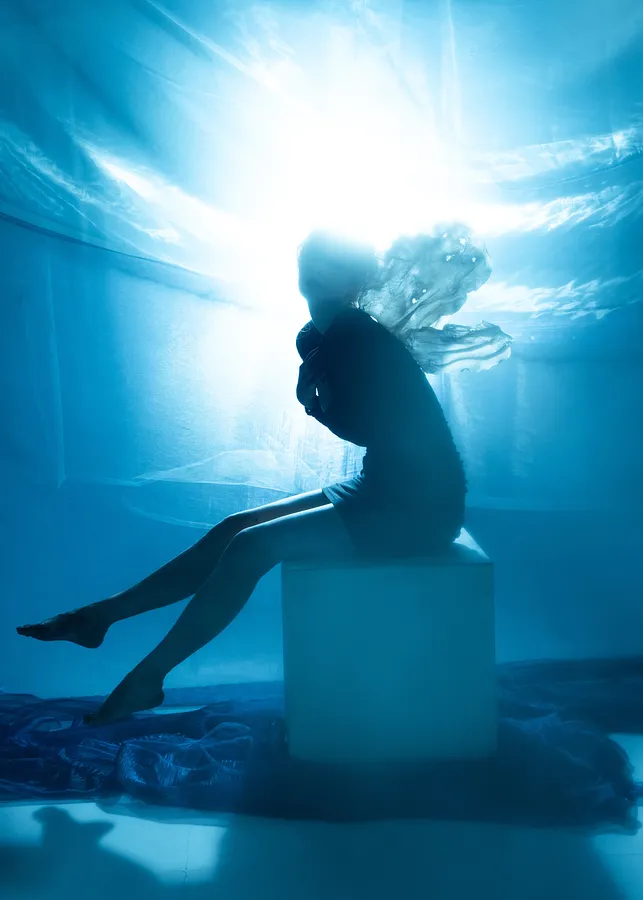
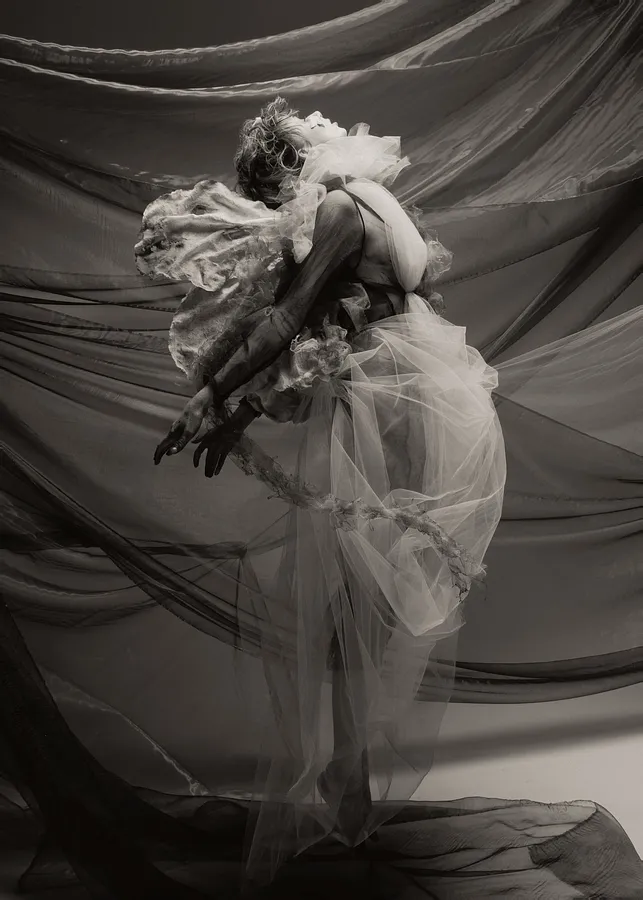
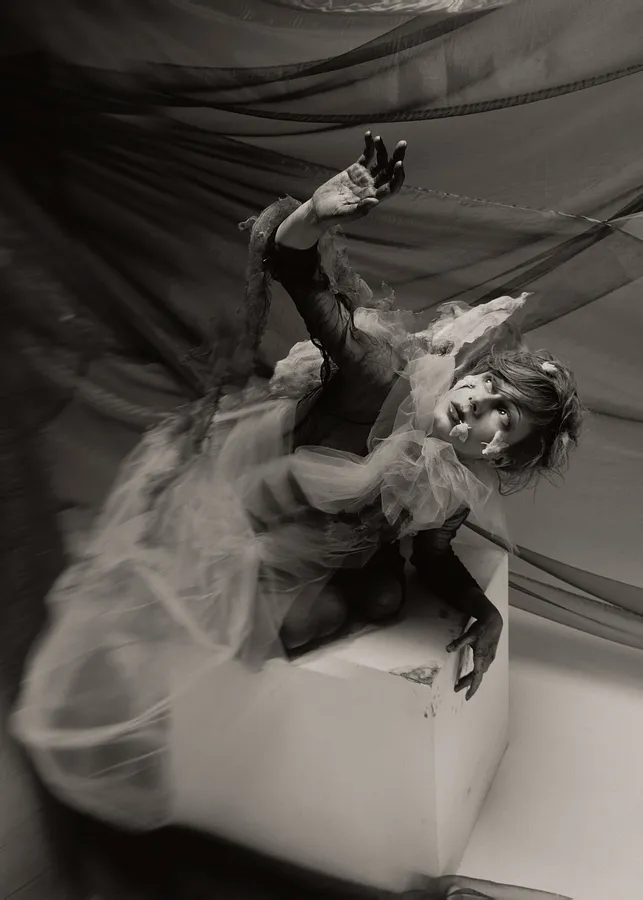
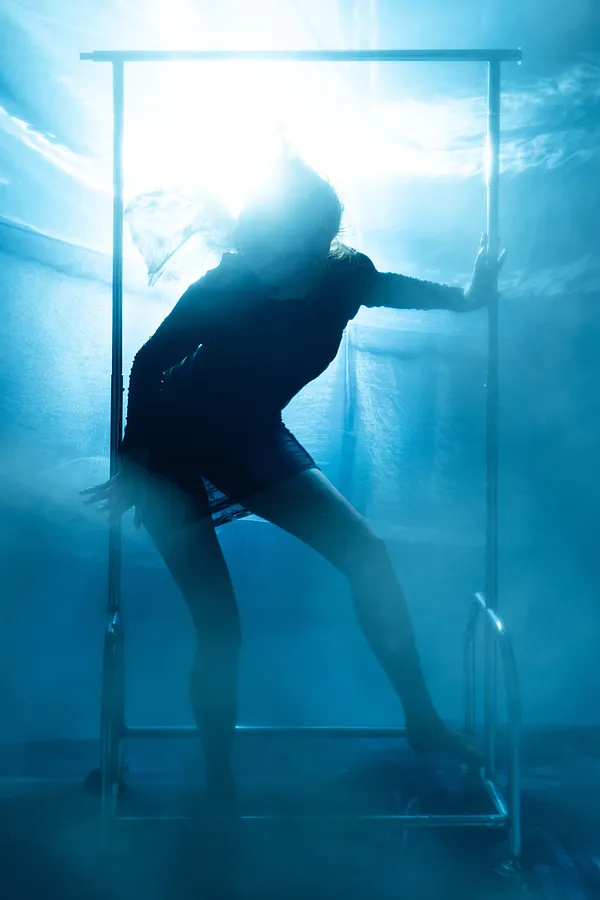
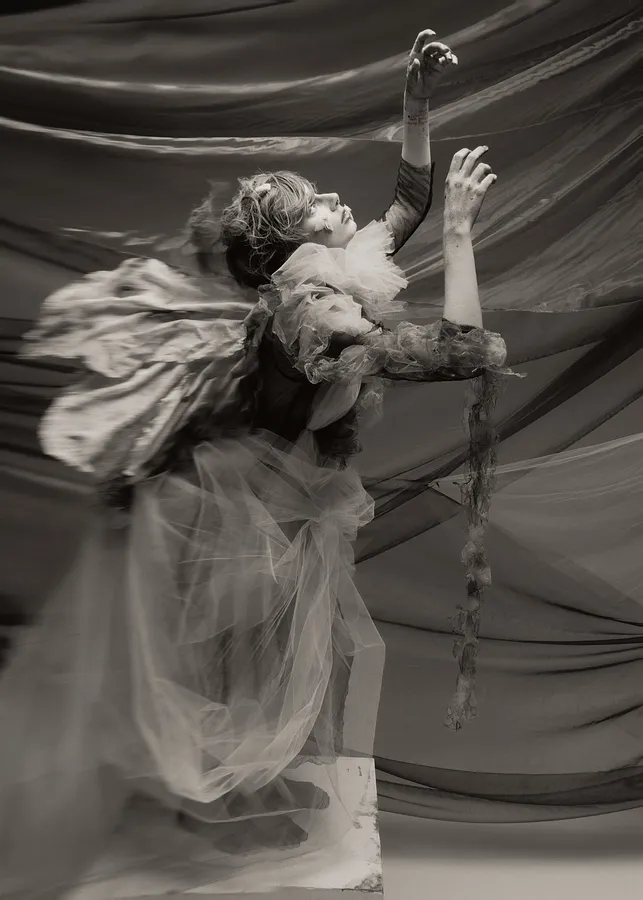
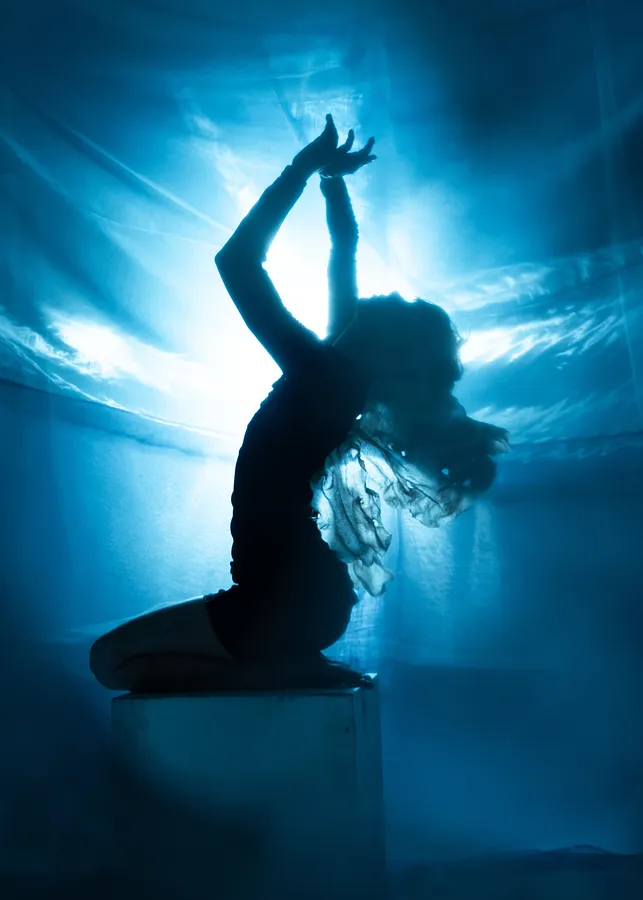
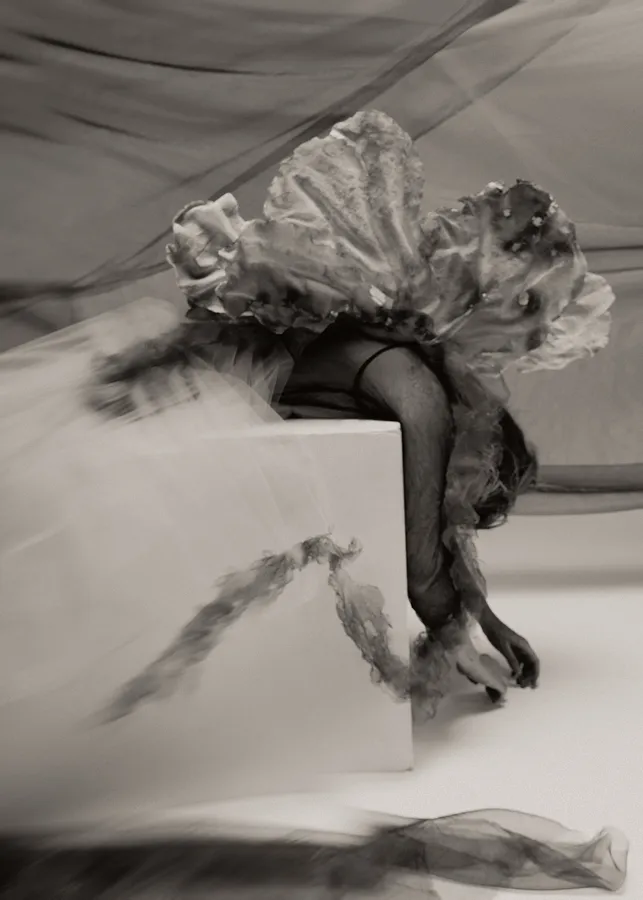
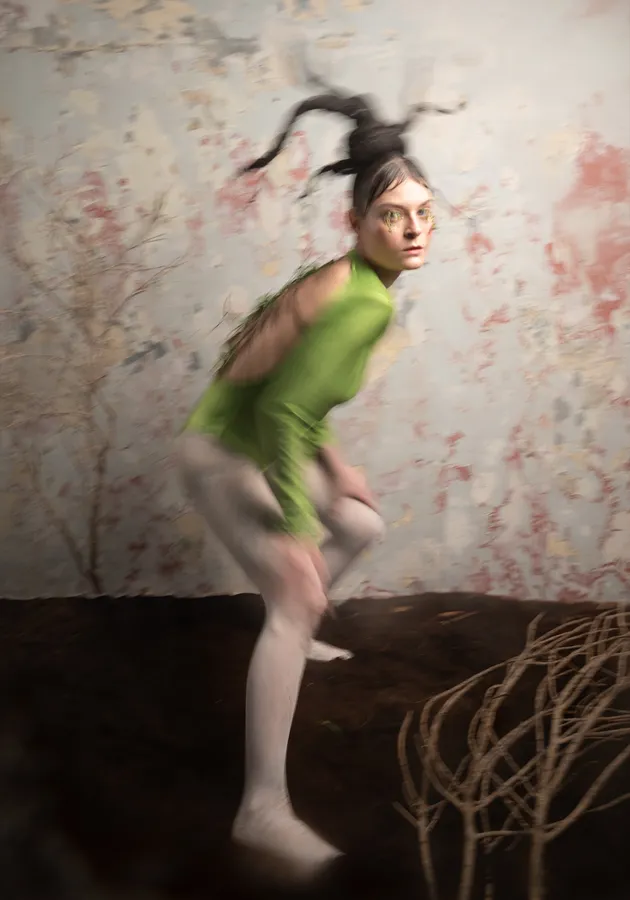
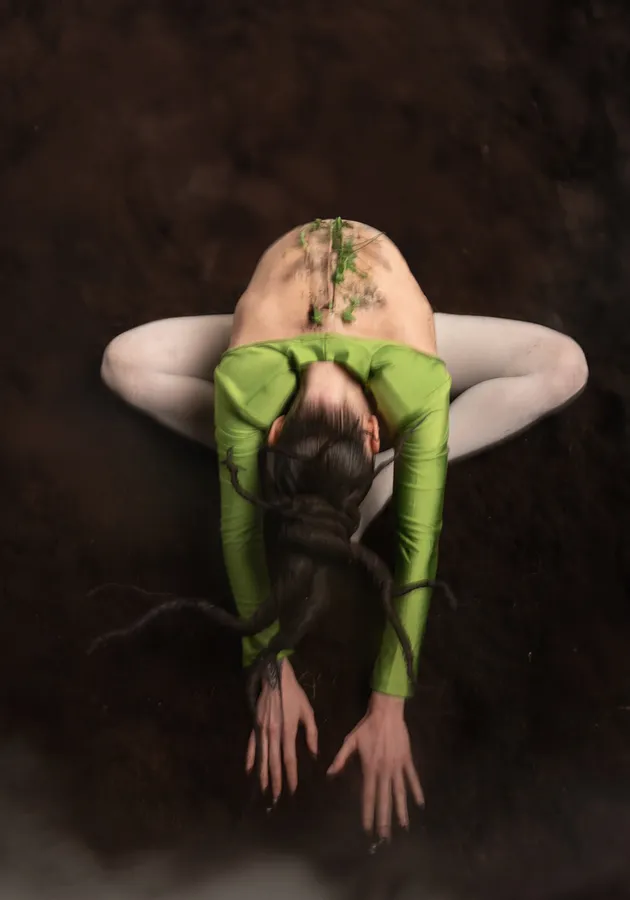
In the series, the body becomes the space in which this loss of autonomy takes physical form. It bends, contracts, reaches upward, moves closer to the source of light, and ultimately changes under its influence. Light ceases to serve as a neutral means of illumination. It acts as an independent force: seducing, blinding, determining the direction of movement, and depriving the subject of the ability to see the consequences of approaching it. The architectural elements of the space simultaneously evoke a threshold, a trap, and a ritual structure within which desire repeats itself to the point of exhaustion.
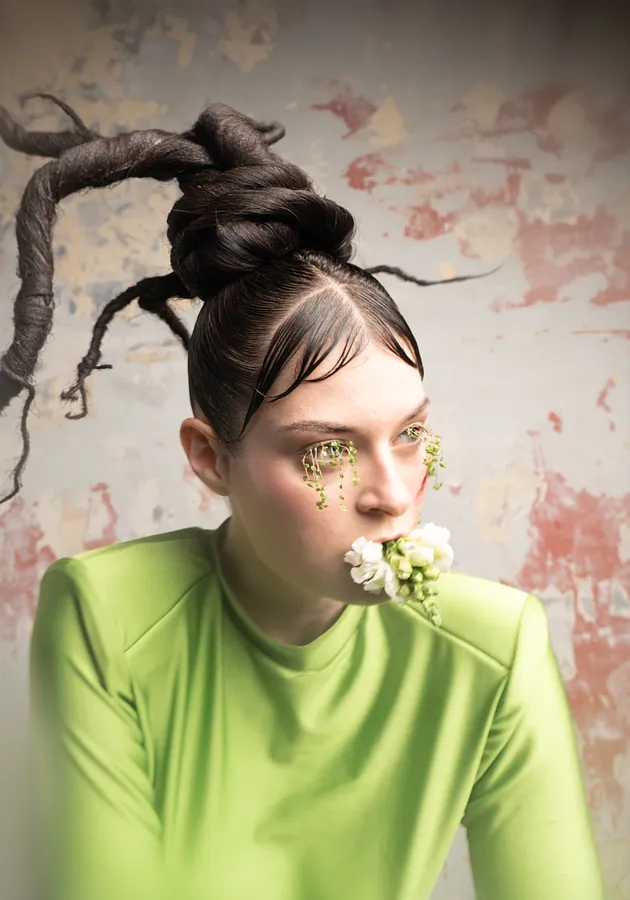
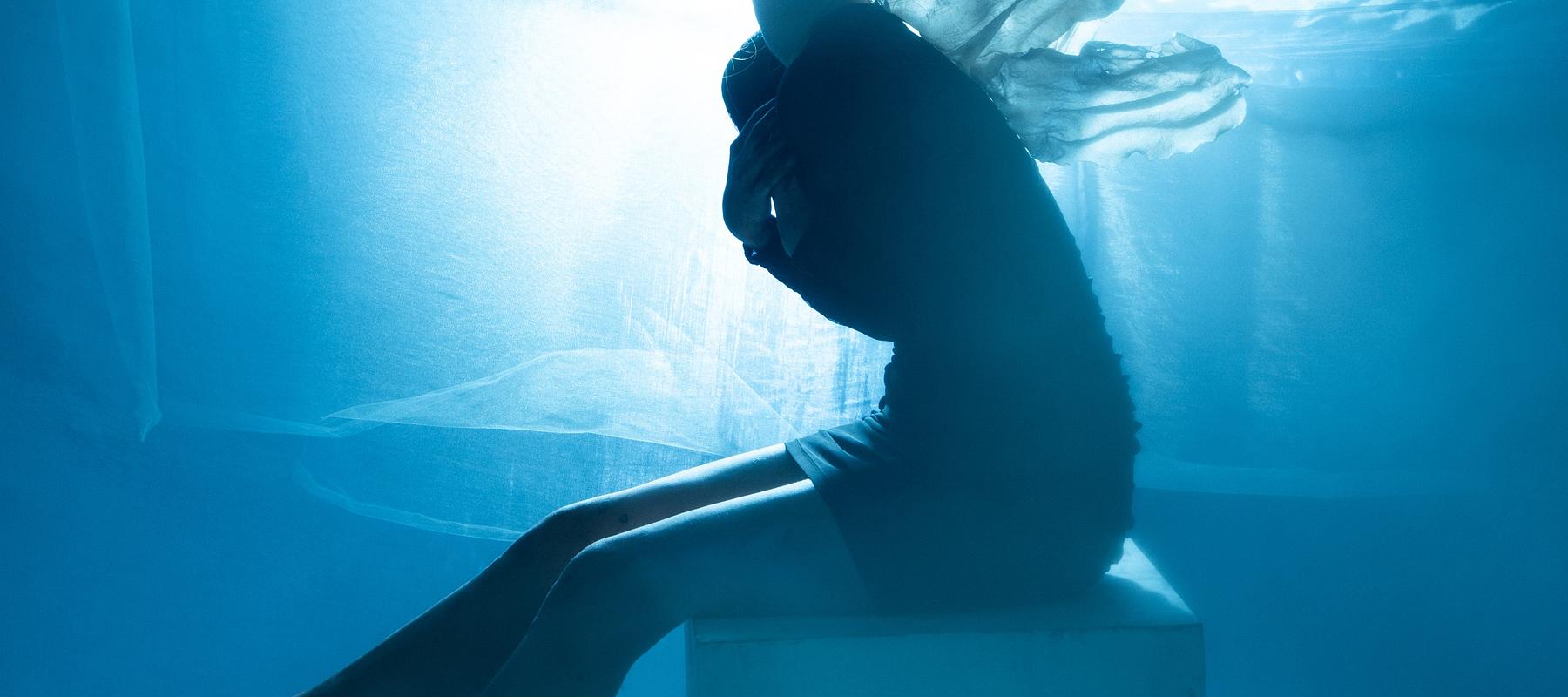
The two chromatic states of the series mark different phases of this process. The cold blue light belongs to the space of seduction. It maintains a distance between the body and the source of desire, creating an illusion of purity, safety, and possible liberation. In this state, the body retains its form, yet its gestures are already entirely oriented toward the light.
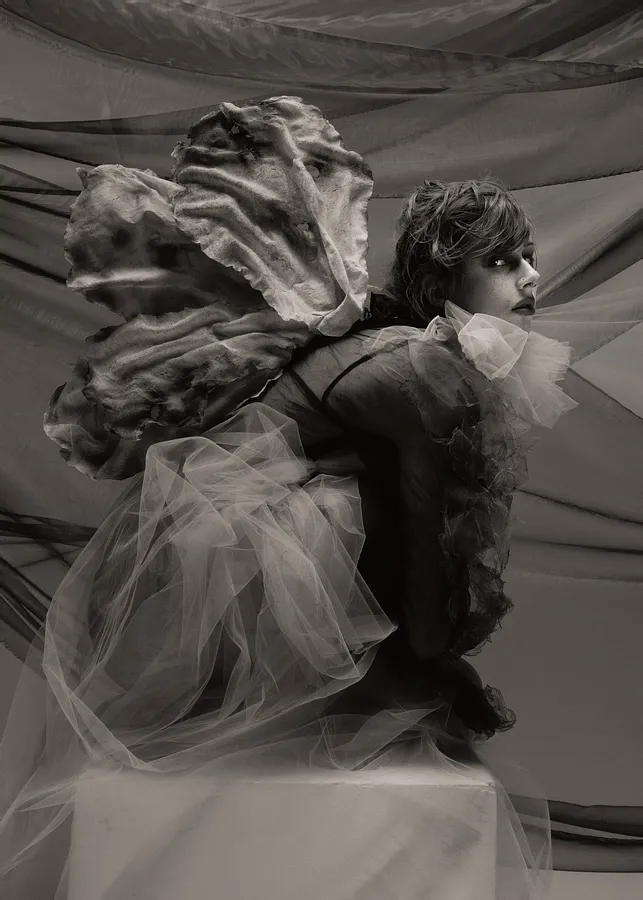
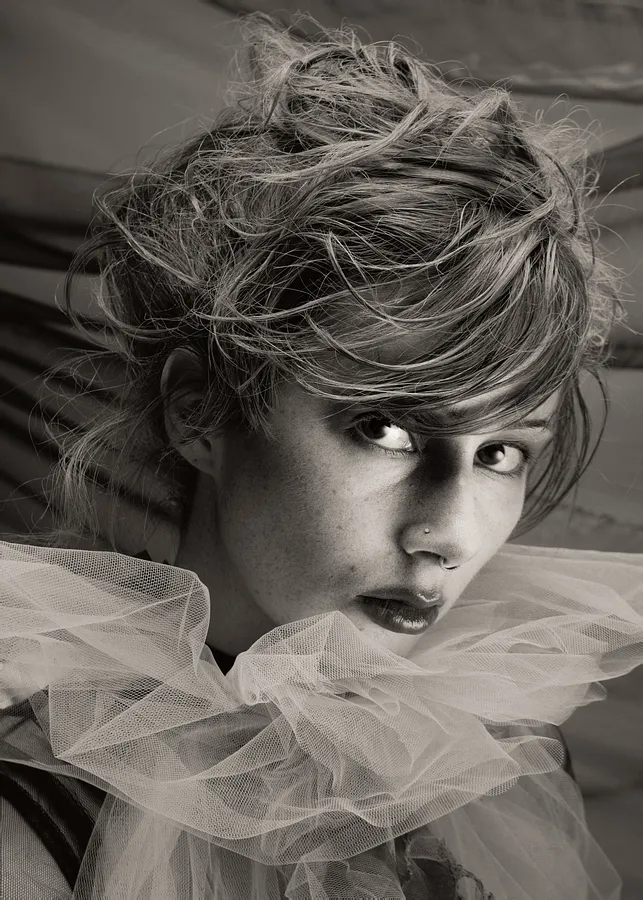
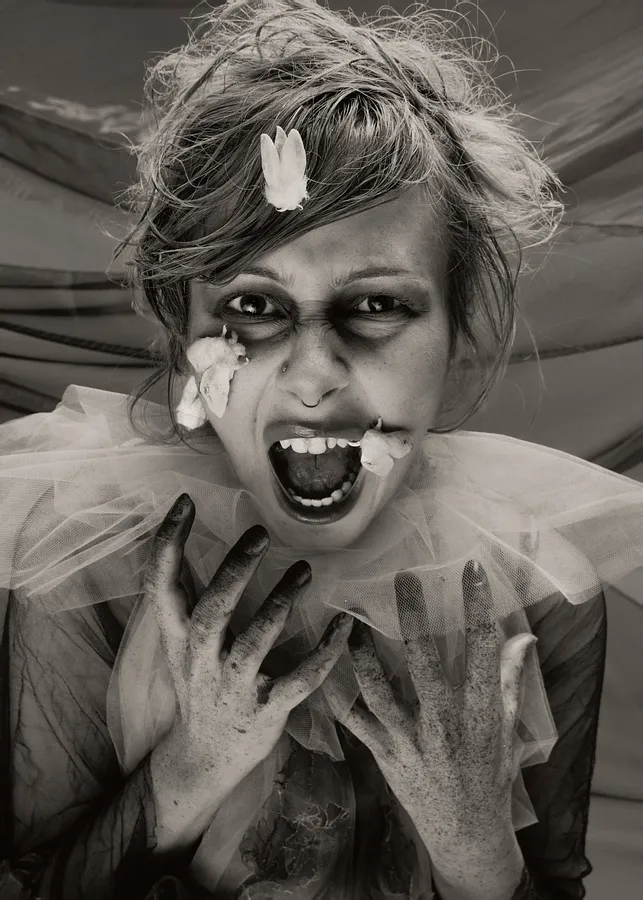
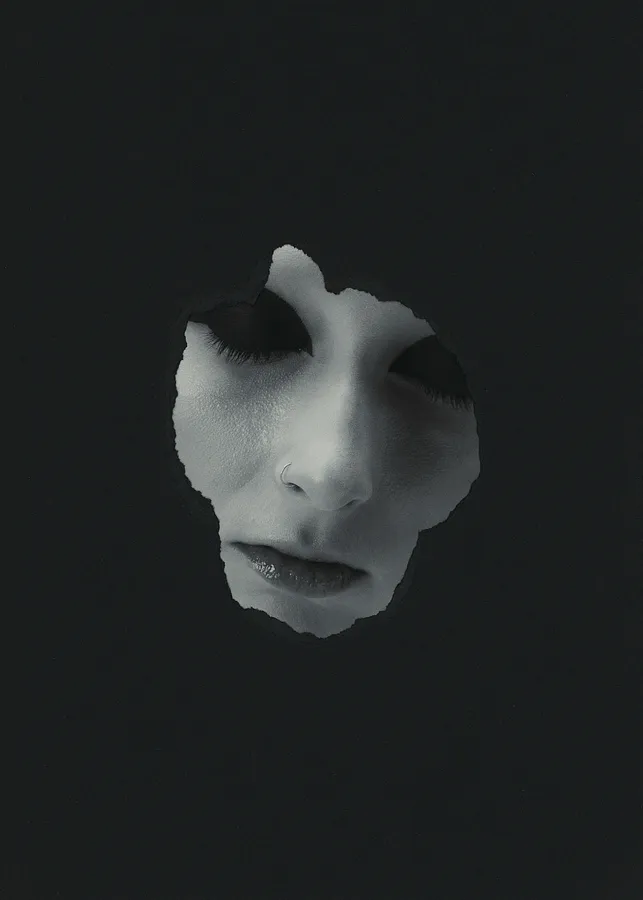
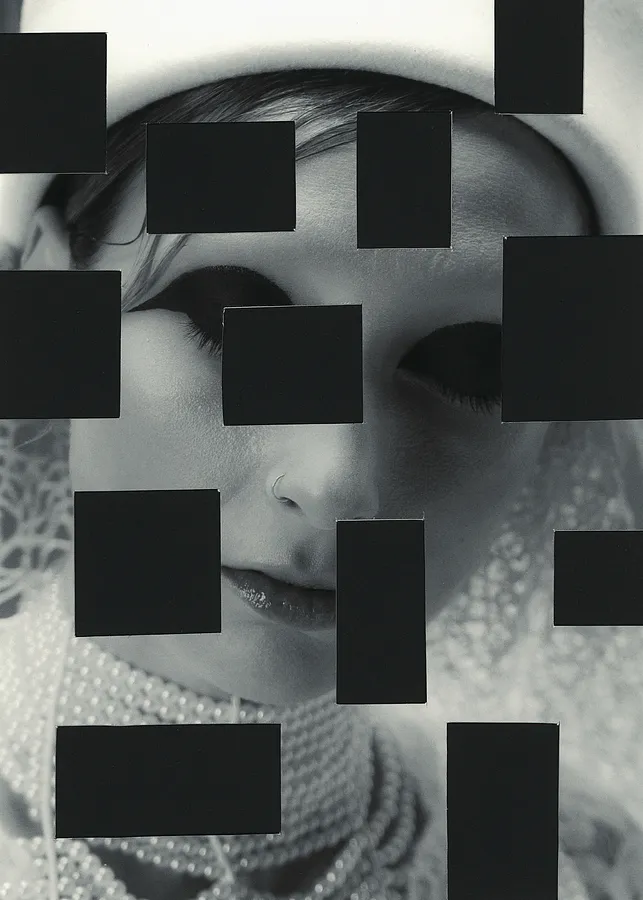
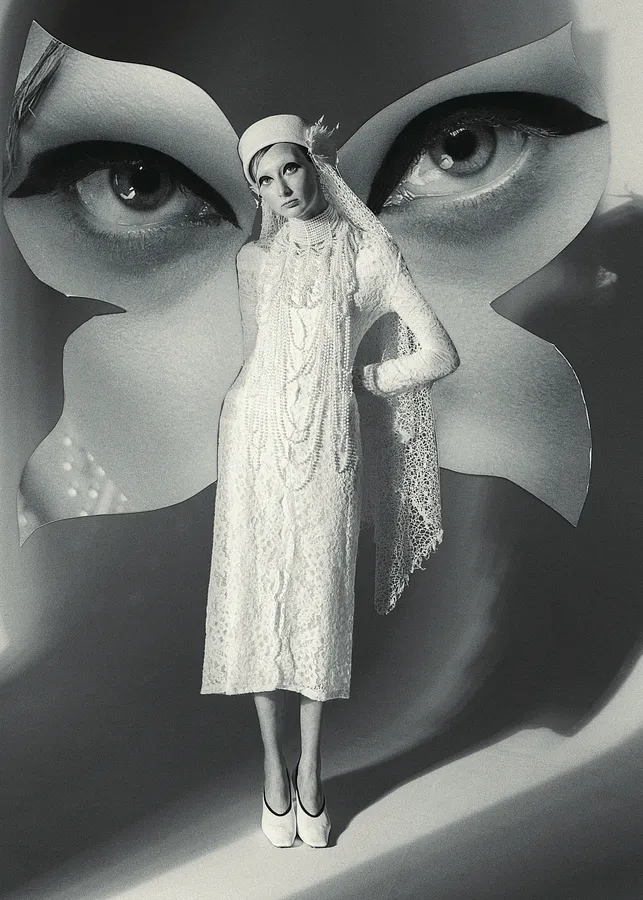
The monochromatic section captures not the moment of destruction itself, but what remains after contact. Colour disappears, and the promise gives way to exhaustion, deformation, and residual bodily memory. The wings cease to signify the possibility of flight; instead, they become an outgrowth, an injury, or a material trace of the transformation endured. The body no longer moves toward the object of desire; it bears the consequences of that approach.
The transition between these two states does not constitute an unequivocal narrative of downfall. The series does not oppose desire and self-preservation as good and evil, nor does it propose renouncing desire as a way to avoid pain. Instead, it considers transformation and self-destruction as processes that may share the same origin. The very impulse that enables a person to transcend their own limits can also make them dependent on an object without which they can no longer imagine their own movement.
THIRST raises the question of the moment at which desire ceases to belong to a person and begins to control them. Does approaching the object remain a conscious choice if the subject anticipates the danger but is no longer capable of changing direction? And is genuine transformation possible without the risk of losing the very form from which it began?
In this sense, thirst emerges not as a lack that can be definitively satisfied, but as a continuous mechanism of approach. Light never becomes an attainable destination: the closer the body comes to it, the less it belongs to itself.